
What is corrective jaw surgery?
When a poor bite comes from the bone itself rather than the teeth alone, the upper jaw, lower jaw or both need to be repositioned. This is known as orthognathic surgery.
When is it recommended?
- A clearly protruding or receding upper or lower jaw.
- Difficulty chewing or biting despite orthodontic treatment.
- An open bite, where the front teeth do not meet.
- Sleep-related breathing problems linked to jaw structure, after proper assessment.
How the case is managed
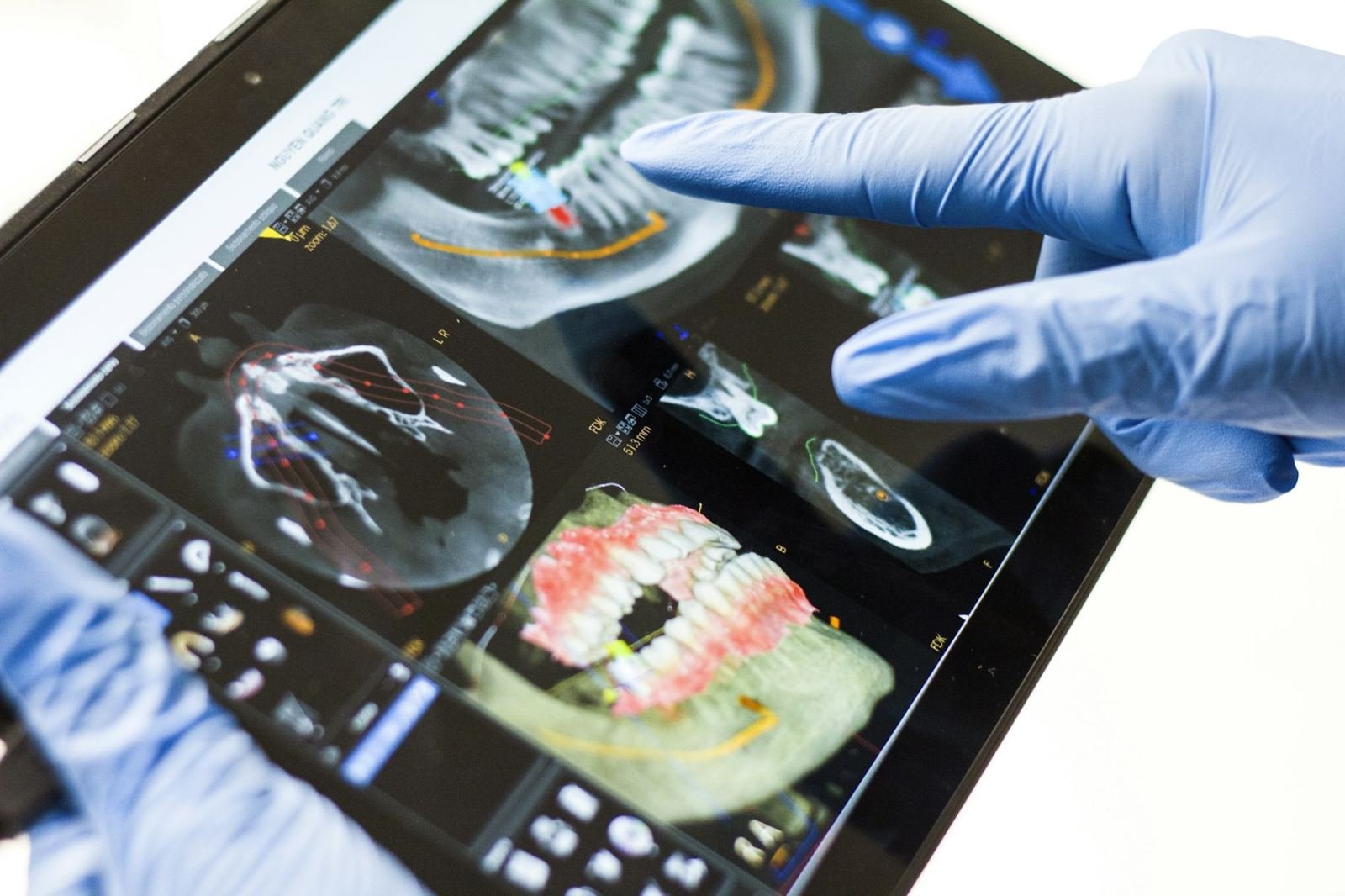
Treatment runs in three stages: braces before surgery to prepare the teeth, surgery — usually through the mouth, without visible facial scars — and finishing orthodontics to fine-tune the bite. Planning is done on scans and digital models together with your orthodontist.
Recovery
Surgery involves a short hospital stay followed by a soft diet and clear instructions. Swelling settles gradually over weeks, and the final shape emerges with time.